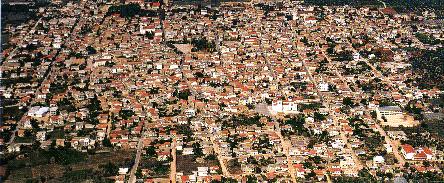
Kalamata: The Lady of the Messinian Bay … Kalamata of the Kalamatianos dance and of the silk scarf, Kalamata of the tasty black olives, of the ripe figs, of the famous “pasteli”(a sweet made of honey and sesame seeds). The Messinian capital, on the one side is being surrounded by the deep blue Messinian bay, and on the other side by the mountain Kalathi. The village Kato Verga, is built to the western side of the mountain as a “balcony overlooking the Messinian bay”. In the days of Homer, kalamata was called Pharae and later received its present name from an icon depicting the Virgin Mary with very beautiful eyes – Kalo mata (beautiful eyes) – which was found in the Byzantine Chapel in the North Wing of the Castle of Kalamata. During the Byzantine years, Kalamata was an important center of Medieval civilization, whilst it was from Kalamata that the victorious Greek Revolution of 1821 started in the small church of Holy Apostles, which is present up to today, at the center of the old market and which was built in the year 1150. Above the city dominates the castle which was built in 1028 by William Villherdouine.
Pylos: (Navarino) (2,107 inhab.) is an immense, well-sheltered bay, that was the theatre of one of the most important chapters of the Greek history: the naval battle of 1827 that was brought to an end by the Treaty of Adrianopoli (1829), the basis of which was the autonomy of Greece imposed on the Turks by the Anglo-Franco- Russian alliance. On the 20th October 1827, the Turkish -Egyptian fleet (82 ships) were stationed in harbour. An allied fleet of 27 ships, under the command of Admiral Codrington, entered ” to negotiate”. A shot was fired ( according to the British version from a Turkish vessel) and the bay was transformed immediately into a gigantic firefight. The western alliance took possession of the place, after having sunk 53 Turkish vessels, the remains of which are lying on the bottom at 15 – 40m deep. The bay is closed to the west by the island of Sphaktiria, high and craggy, separated from the coast to the north by a narrow and impracticable passage. Two rocks and the island Pylos are separated from Sphaktiria to the south. Pylos, hollowed out in a big rocky arc, has a lighthouse (21.b.10s) on its southern extremity.
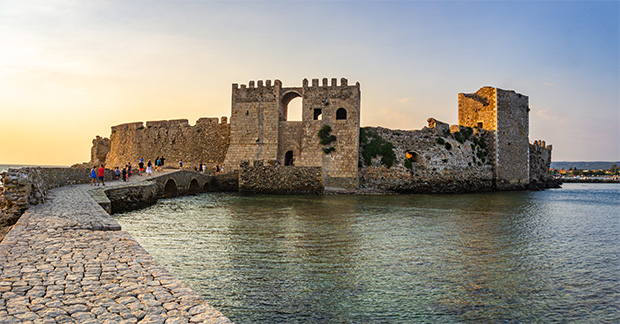
The north coast of the bay, low and sandy, has some lagoons in the vicinity. In the southeast corner, one finds the charming village and the marina of Pylos, overlooked to the southeast by a Turkish fortress, right at the entrance to the bay. At the centre of this, there is the island of Khelonosi with a lighthouse. (1.b.r.3s). From north or from the south, the arrival at Pylos is always very interesting: the high cliffs of Sphaktiria, the French castle constructed on a spur around 150m high to the northwest of the bay, the Turkish citadel at the entrance, make for an exceptionally impressive scene, where you are able to stay several days.
The modern town here (Navarino to some) is far away from the sites, which Strabo describes. The island of Sphakteria (the long, thin island pictured to the right of the bay below), where some famous naval battles (Battle of Navarino) and a siege were fought, dominates the bay, which is in itself quite beautiful. The north end of the bay is the site of the classical town and the fort, but the modern town sits at the other end of the bay in this picture. The town is quaint, has a Venetian Castle of Pylos – Niokastron which is attempting to acquire a collection centering around underwater archaeology, and really quite nice for a stopover (it does have most of the necessities). There is also a small archaeological museum, the Antonopouleion, which I did not get a chance to see.
Miles north of the bay at Englianos, modern Chora, is the Palace of Nestor, a Mycenaean site which draws most of the tourists to this area. The finds from the site are exhibited at the nearby archaeological museum of Chora. Unfortunately the general rule that sites and museums are closed on Mondays was not excepted here (as the French guidebook claimed). So I missed this site after traveling this far. But the views are really nice and I enjoyed a couple hours sleeping by a spring next to the olive orchards while I waited on the next bus. The excavations at Englianos have proven to be a treasure mine of information for archaeologists. Today, the excavations and findings are available online, just waiting for those enterprising individuals out there like yourself. Don’t be intimidated by all the information at this site, the summaries and reports of the digs are the easiest to handle. There’s plenty people to thank for this information, but the folks at the University of Cincinnati have been the leaders of the digs here since its early days. If you can deal with a little German, there’s a great site with a computer reconstruction of the Palace of Nestor online at the Antikensammlung Erlangen Internet Archive.